






The proudest moment of my 17th year was when I passed my road test and received my driver's license. Not because I nailed my three-point turn and parallel parking (I did), but because I finally got to check the box that made me an organ donor.
Young and idealistic, I thought I was doing a very good thing: were I to die, my body would live on and save someone else's life. And I was. Right up until the system corrupted the organ donation process, that is.
On July 20, the New York Times reported how the push for organ donation is harming donors and putting our lives at risk:
Last spring at a small Alabama hospital, a team of transplant surgeons prepared to cut into Misty Hawkins. The clock was ticking. Her organs wouldn’t be usable for much longer.
Days earlier, she had been a vibrant 42-year-old with a playful sense of humor and a love for the Thunder Beach Motorcycle Rally. But after Ms. Hawkins choked while eating and fell into a coma, her mother decided to take her off life support and donate her organs. She was removed from a ventilator and, after 103 minutes, declared dead.
A surgeon made an incision in her chest and sawed through her breastbone.
That’s when the doctors discovered her heart was beating. She appeared to be breathing. They were slicing into Ms. Hawkins while she was alive.
Misty Hawkins wasn't alone, either.
New York Times reporters Brian M. Rosenthal and Julie Tate have just published this new article: “ A Push for More Organ Transplants is Putting Donors at Risk.”
— Dr. Heidi Klessig (@heidiklessigmd) July 20, 2025
They document the MANY cases where organ procurement pushed to harvest the organs of people who were still alive. For… pic.twitter.com/foNCG3EkMa
Here's the story Danella Gallegos:
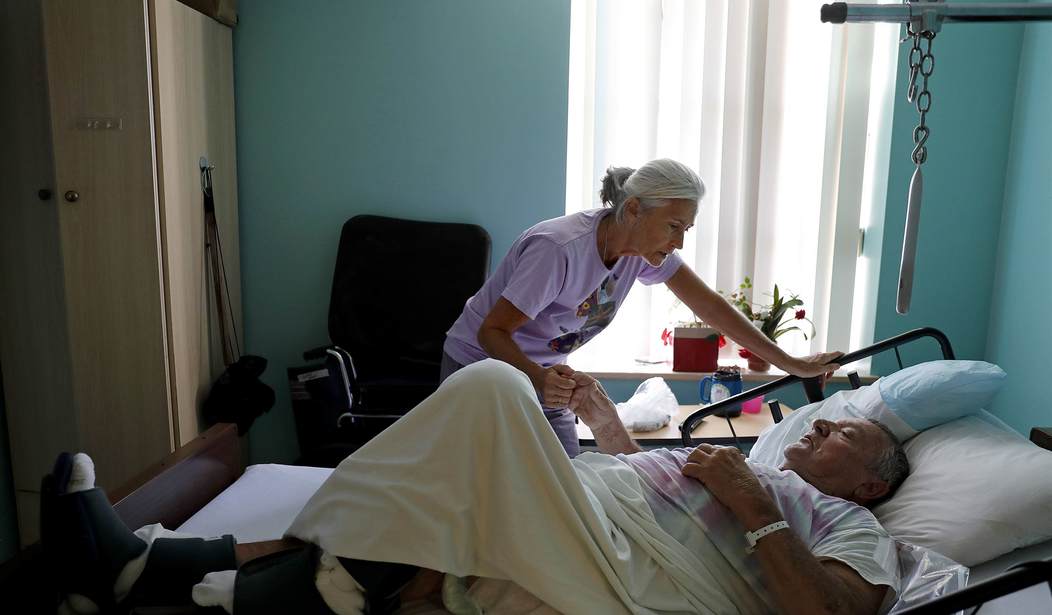
In 2022, when she was 38 and homeless, Ms. Gallegos was hospitalized and went into a coma. Doctors at Presbyterian Hospital in Albuquerque told her family she would never recover.
Her relatives agreed to donation, but as preparations began, they saw tears in her eyes. Their concerns were dismissed, according to interviews with the family and eight hospital workers. Donation coordinators said the tears were a reflex. (Tears can be an involuntary response to irritants.)
On the day of the planned donation, Ms. Gallegos was taken to a pre-surgery room, where her two sisters held her hands. A doctor arrived to withdraw life support. Then a sister announced she had seen Ms. Gallegos move. The doctor asked her to blink her eyes, and she complied. The room erupted in gasps.
Still, hospital workers said, the procurement organization wanted to move forward. A coordinator said it was just reflexes and suggested morphine to reduce movements. The hospital refused. Instead, workers brought her back to her room, and she made a full recovery.
On July 22, Secretary of Health and Human Services, Robert F. Kennedy, Jr., announced reforms to the organ donation and procurement process:
Our findings show that hospitals allowed the organ procurement process to begin when patients showed signs of life, and this is horrifying. The organ procurement organizations that coordinate access to transplants will be held accountable. The entire system must be fixed to… https://t.co/DeiFa2FlEJ
— Secretary Kennedy (@SecKennedy) July 22, 2025
In a statement, HHS noted the following:
[Health Resources and Services Administration] HRSA directed the Organ Procurement and Transplantation Network (OPTN) to reopen a disturbing case involving potentially preventable harm to a neurologically injured patient by the federally-funded organ procurement organization (OPO) serving Kentucky, southwest Ohio, and part of West Virginia. Under the Biden administration, the OPTN’s Membership and Professional Standards Committee closed the same case without action.
Under Secretary Kennedy’s leadership, HRSA demanded a thorough, independent review of the OPO’s conduct and the treatment of vulnerable patients under its care. HRSA’s independent investigation revealed clear negligence after the previous OPTN Board of Directors claimed to find no major concerns in their internal review.
HRSA examined 351 cases where organ donation was authorized, but ultimately not completed. It found:
- 103 cases (29.3%) showed concerning features, including 73 patients with neurological signs incompatible with organ donation.
- At least 28 patients may not have been deceased at the time organ procurement was initiated—raising serious ethical and legal questions.
- Evidence pointed to poor neurologic assessments, lack of coordination with medical teams, questionable consent practices, and misclassification of causes of death, particularly in overdose cases.
Vulnerabilities were highest in smaller and rural hospitals, indicating systemic gaps in oversight and accountability. In response to these findings, HRSA has mandated strict corrective actions for the OPO, and system-level changes to safeguard potential organ donors nationally. The OPO must conduct a full root cause analysis of its failure to follow internal protocols—including noncompliance with the five-minute observation rule after the patient’s death—and develop clear, enforceable policies to define donor eligibility criteria. Additionally, it must adopt a formal procedure allowing any staff member to halt a donation process if patient safety concerns arise.
I note that Danella Gallegos was homeless, and Misty Hawkins had lifelong cognitive impairments and lived with her parents. They fall into that category of 'vulnerable.'
And while Gallegos survived her ordeal and made a full recovery, Hawkins did not. She was 42-years-old. I am, too.
Organ transplants are a marvel of modern medicine. The first successful kidney transplant happened in 1954, the year my mother was born. The first successful liver transplant took place over a decade later, in 1967. That same year, a South African doctor performed the first human heart transplant; that patient lived for 18 days. It wasn't until 1989 that the first living-donor liver transplant took place. Within my lifetime, the introduction of immunosuppressants and anti-rejection drugs has made a difference, and countless lives have been saved through the selflessness and generosity of organ donors and their families.
For years, I had seen posts on social media warning that healthcare organizations were doing precisely what the New York Times and HHS are talking about today. I -- a healthcare professional -- was appalled at what I considered conspiratorial fear-mongering. I was wrong.
I'd forgotten that just because I practice medicine with high ethical standards, not everyone does.
When we potential organ donors check that box on our driver's licenses, we are not consenting to be treated like a bag of spare parts. We are worthy of comprehensive medical care and a chance to recover, just as Danella Gallegos did. Instead, whether through negligence, malice, or a warped sense of priority, the organ donation process has gone off the rails.
I highly recommend that every adult have an advance directive to spell out their wishes for medical care. I do, and my loved ones are aware that if something happens and I am truly brain dead, then -- and only then -- would I be okay with donating my organs.
However, the current system is reprehensible.
So today I removed my name from Wisconsin's donor registry. And I would recommend you do, too, until the organ donation process returns to the first principle of medicine: Do no harm.