


As Twitchy reported, even an Atlantic staffer was quick to distance himself from an opinion piece in The Atlantic by two professors arguing that “significant speech control is an inevitable component of a ‘mature and flourishing internet.'” In the piece, the two argued that, in the debate over freedom vs. control of the internet, “China was largely correct, and the U.S. was wrong.”
Now Stephen Miller has noted that CNN is providing a somewhat similar analysis in a piece entitled, “China’s model of control has been blamed for the coronavirus crisis, but for some it’s looking increasingly attractive.”
.@jgriffiths looks at the global response to China’s handling of the Covid-19 pandemic – a crisis which has highlighted the benefits of a strong government and centralized planning while exposing the limitations of private industry to respond quickly. https://t.co/mC7nlwy0FF
— CNN Asia Pacific (@cnnasiapr) April 29, 2020
I hope people are paying attention to what’s happening in the American media right now pic.twitter.com/OmQxc5MZmQ
— Stephen L. Miller (@redsteeze) April 29, 2020
James Griffiths writes for CNN:
Just as crises around fake news and online disinformation have made it easier for China to push its model of internet sovereignty — one that has been happily embraced by those governments already keen to censor online dissent — so too has the current pandemic provided an opportunity and an excuse to pursue the type of authoritarian power exercised by Beijing.
…
But for those pushing these changes, China could be perceived to be a strong argument that an empowered state is what is needed to respond to the pandemic. Regardless of the many valid criticisms of how Beijing initially handled the crisis, it appears to have been able to get its domestic epidemic under control and the economy back on track better than many other countries.
The US government, meanwhile, presents something of an uneasy contrast: with a President musing about whether ingesting disinfectants could be used to treat the virus and encouraging protesters to demand an end to quarantine measures.

It doesn’t seem that uneasy a contrast to us: We’ll take the president musing about “ingesting disinfectants” and ending crippling statewide lockdowns over whatever Beijing has to offer.
We’re old enough to remember all of the think-pieces about how maybe absolute freedom of speech wasn’t such a good thing after all — the ones that appeared after President Trump was inaugurated. And it was only last November when the New York Times offered up an opinion piece entitled, “Free Speech Is Killing Us.”
Miller’s right: Pay attention.
Holy crap. https://t.co/n23FkApO7c
— Liz Wheeler (@Liz_Wheeler) April 29, 2020
The fact that these are actual headlines is frightening. https://t.co/ZUe1xQLwBs
— Blake H. Beall (@classicbeall) April 29, 2020
— China is lying (@jtLOL) April 29, 2020
— Lone Cypress (@Cr8zyWhackFunky) April 29, 2020
What part of this pandemic makes smooth brain go:
"You know, China had this right…we just have to arrest journalists, dissappear doctors, and arrest people for free speech and this covid 19 things would have just GONE AWAY." https://t.co/TVad8Hj4Tq
— Grummz (@Grummz) April 29, 2020
“China was correct, the US was wrong”
The reduction of civil liberties and increase of surveillance.
What’s happening? https://t.co/bBSpFY4yEM
— Steve Howey (@stevehowey) April 29, 2020
I give 'em another week before they start printing thinkpieces calling for involuntary organ harvesting https://t.co/lfMnsDTOyv
— David Burge (@iowahawkblog) April 29, 2020
While it's sickening to watch and we must push back and mock these communists, many of us have been attacked for suggesting the left was taking us down this road for years so maybe more people will resist what truly needs resisting. Marxism.#DeathCult
— Middle Name's James (@doradopescado) April 29, 2020
Why is it that the people who point to socialist/communist countries as models never actually move to those countries themselves?
Always believe what people do more than what they say.
— Hormel Chavez (@ItsHormelChavez) April 29, 2020
I think it's very important that people come to terms with the fact that our media is much worse than biased. https://t.co/hfE4OqZCBy
— The Partyman (@PartymanRandy) April 29, 2020
The left's open admiration for China is open admiration for a totalitarian fear state. They covet the control.
— Ed Folsom (@EdFolsomlaw) April 29, 2020
Dupes, useful idiots, fellow travelers, or just bought and paid for by the Chinese Communist Party? None of these explanations are good for the West's CCP kowtowing https://t.co/R6Ofg4Ki1F
— Benjamin Weingarten (@bhweingarten) April 29, 2020
The mainstream media is openly embracing authoritarianism, liberty is a beautiful aspect of the American way of life. Don't sell that off for the false promise of protection https://t.co/x1GJyu2CbR
— Toast On Cheese (@ToastOnCheese3) April 29, 2020
Keep in mind the Left is not anti-despot, as long as it is their despot. https://t.co/ZGkQeLh5UG
— Oh THAT Guy (@NathanWurtzel) April 29, 2020
Jack Goldsmith is professor at Harvard. Pay attention to the education system as well.
— Northman (@charbo84) April 29, 2020
If any of this surprises you, I have to wonder whether you have ever attended or stepped into a college or university….
…within the last, oh say, 40 years.
— ???????? ??????? (@MonsieurBouvard) April 29, 2020
— ? Belle McSassybutt ? (@MyBamaBelle528) April 29, 2020
Left wing propaganda of course. We're much stronger than you know. But it'll require a collective effort. In both mind and body. If there is ever a time when you need to literally stand up to fight. It is now. Thongs could begin to appear worse. Don't be fooled or give up.
— K94POTUS (@WorstNi79499146) April 29, 2020
Wonder what DNC Media would do if a Chinese Communist Party official decided to criticize Joe Biden over the Tara Reade story. Might be the only statement a CCP apparatchik could make that our media would refuse to run without criticism. https://t.co/gWjkhHx4vB
— John Hayward (@Doc_0) April 29, 2020
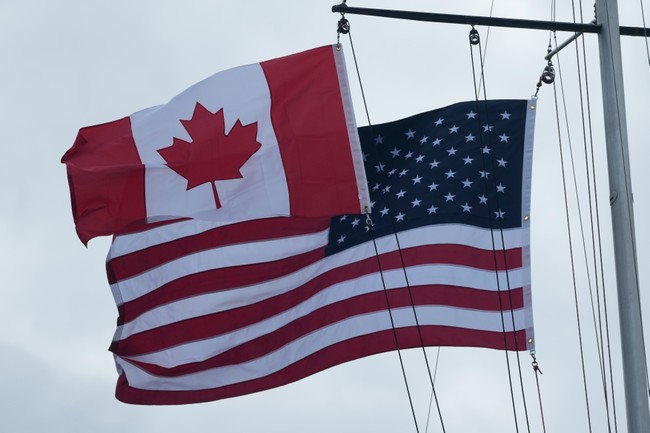
It’s not just America, either:
It’s already happened in Canada. Not good. pic.twitter.com/zTrk39XAoN
— Gord?? (@G0RD73) April 29, 2020
Related:
Professors, of course: Significant speech control is an inevitable component of a ‘mature and flourishing internet’ https://t.co/E50HjsITnj
— Twitchy Team (@TwitchyTeam) April 28, 2020







Join the conversation as a VIP Member