






“Is Democracy Constitutional” is pretty good clickbait. Atlantic staff writer Adam Serwer does have a specific Supreme Court case in mind and discusses it at length in his piece. But Serwer is pretty sure he knows how the Supreme Court is going to rule, now that it’s been “captured” by the Republican Party. What was it for the past 50 years before it was captured?
“Hypothetically, the Supreme Court could check such abuse of power; its capture by the Republican Party means that, in practice, it might not.” @AdamSerwer’s latest: https://t.co/vJ6SlX620C
— Adrienne LaFrance (@AdrienneLaF) July 23, 2022
Serwer’s concern is the “crank legal premise called the independent-state-legislature theory”:
Every American child in public school learns that the U.S. political system is one of checks and balances, in which the judicial, executive, and legislative branches constrain one another to ensure that no one branch of government exercises too much power. One pending case before the Supreme Court asks: What if they didn’t?
In Moore v. Harper, North Carolina Republicans are arguing that no other state body, including the state supreme court, has the power to restrict the legislature’s ability to set voting rules—specifically ones allowing legislators to gerrymander the state, in defiance of a ruling by the state supreme court finding that their plan violated the state constitutional amendment guaranteeing the right to vote. This belief is based on a crank legal premise called the “independent-state-legislature theory.”
…
This outcome in Moore v. Harper would not affect state and local contests, but in large part Republicans have already succeeded in election-proofing legislatures in states they control by drawing district lines to favor Republican-leaning constituencies. In closely divided states such as Wisconsin, gerrymandering and geographic polarization mean that the GOP can win some two-thirds of state legislative seats with less than half of the statewide vote.
What’s to happen now that the Democrats can’t rely on the Supreme Court to save them?
Did the republicans pounce on or seize the court during the capture?
— Don Helpingstine (@dhelpingstine) July 23, 2022
“Its capture”?
— RoninPeon (@FawksWatcher) July 23, 2022
Beat me to it. Filling vacancies is capture now lol.
— Kelkat (@Tweetytweeter63) July 23, 2022
By this standard the House is captured, the Senate is captured.
— Creighton (@DohoGg) July 23, 2022
The Democrat appointees vote together more of the time than Republican appointees, so I’m not sure what “capture” @AdamSerwer is talking about.
— Brian Jackson (@brianjackson502) July 23, 2022
Any evidence The Atlantic decried the hold the left had on SCOTUS for 50 years? I thought not.
— Wes (@hlgh_desert) July 23, 2022
It’s “capture” by the Left would be the epitome of American democracy, of course. 🙄
— WYUSMCCOP (@wyusmcleo) July 23, 2022
A point that isnt made enough is that America is not and never was a democracy
— Rook0613 (@rook0613262) July 23, 2022
Executive editor for the Atlantic. In other words, completely unserious thinker.
— ICallahan1966 (@ICallahan1966) July 23, 2022
— Red Dot in a Blue Dot in a Red State (@reddotaustintx) July 23, 2022
And this was just very funny: “This can all be reconciled given the Republican Party’s de facto position that elections are by definition illegitimate if the GOP does not win them”… says the mouthpiece for the party that decries all GOP victories as illegitimate.
— Brian Jackson (@brianjackson502) July 23, 2022
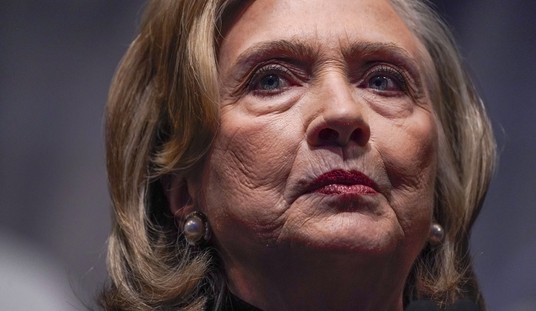
Just ask them if Donald Trump stole the election in 2016. Ask Hillary Clinton.
Oh FFS go touch some grass
— ButterFriedCrisco (@fried_crisco) July 23, 2022
Yawn…you guys enjoy printing the same nonsense over and over and over?
— Conservatalian 2.0 (@Conservataliano) July 23, 2022
So a Republican president filling vacancies is “capturing” the Supreme Court. What would it be called if President Biden packed the Supreme Court to make liberals the majority? Would that set things back to the way they’re “supposed” to be?
Related:
Oh honey, NO: Justice Kagan SCHOOLED on her own job after claiming SCOTUS shouldn’t stray too far from public sentimenthttps://t.co/OmfSsB83zb
— Twitchy Team (@TwitchyTeam) July 22, 2022

Join the Conversation
VIP members get the ability to comment on articles.