





It’s something we’ve wondered ourselves: What are all the people whose whole lives have revolved around hating President Trump going to do once he’s out of the Oval Office? We already know that at least one of the Never-Trumpers heading the Lincoln Project has been sniffing around AOC’s Twitter feed to see if she wants to team up.
The New York Times has published a piece by novelist Viet Nguyen about post-Trump literature: What will writers do now that their daily dose of outrage has passed?
I have some things to say about politics, whiteness, and literature, along with Trump, Obama, war, multiculturalism, settler colonialism, and Palestine. With shout outs to @charles_yu https://t.co/Duh01dHJg0
— viet nguyen (@viet_t_nguyen) December 22, 2020
Nguyen writes:
… Mr. Trump destroyed the ability of white writers to dwell in the apolitical. Everyone had to make a choice, especially in the face of a pandemic and the killing of George Floyd, both of which brought the life-or-death costs of systemic racism and economic inequality into painful focus.
But in 2021, will writers, especially white writers, take a deep breath of relief and retreat back to the politics of the apolitical, which is to say a retreat back to white privilege?
Explicit politics in American poetry and fiction has mostly been left to the marginalized: writers of color, queer and trans writers, feminist writers, anticolonial writers.
…
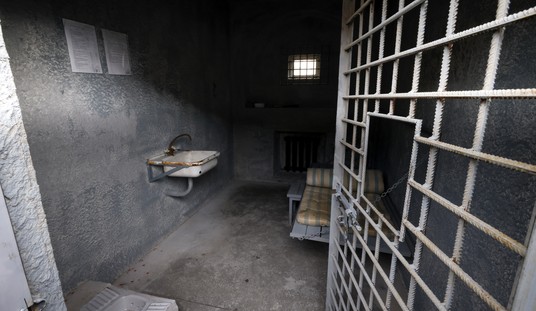
“Colonizers write about flowers,” Ms. [Noor] Hindi writes. “I want to be like those poets who care about the moon. Palestinians don’t see the moon from jail cells and prisons.”
This is my kind of poem.
“I know I’m American because when I walk into a room something dies,” Ms. Hindi writes. “When I die, I promise to haunt you forever.”
Jesse Jingal wants to know how this sentence got past the New York Times’ layers and layers of fact-checkers:
How does a sentence like this that is just completely, obviously false, and which is debunkable with about two seconds of Googling, get published in the Times? pic.twitter.com/OIHYrPc9Y1
— Jesse Singal (@jessesingal) December 23, 2020
In case that’s too small to read:
The United States, as a settler colonial society that disavows its settler colonial origins and present, sees a like-minded ally in Israel. The only Americans — many of Palestinian descent — getting canceled by being fired, denied tenure or threatened with lawsuits are the ones who denounce Israeli settler colonialism and speak out for the Palestinian people.
Really? The only Americans getting canceled are those who speak out for the Palestinian people? How did this get published?
well, for one, it's not a Tom Cotton op-ed
— Jeryl Bier (@JerylBier) December 23, 2020
Well, it wasnt written by a Senator or something.
— Jonathan H. Adler (@jadler1969) December 23, 2020
This article puts Jewish staffers at the times in danger
— M dot Beezy (@mbeezy_too) December 23, 2020
also anyone who reads it
— firecracker (@kneedull) December 23, 2020
Over 200 pieces of evidence to the contrary: https://t.co/MQQ5V1o1A7
— EverythingOppresses (@SoOppressed) December 23, 2020
Funny how this piece's premise is that Trump doesn't read when it's clear the author hasn't read anything on this subject (or just a FIRE report), or he'd knows this happens to many other people on many other issues (including pro-Israel or just Israeli people on campuses).
— Yair Rosenberg (@Yair_Rosenberg) December 23, 2020
Here’s an entire book ? w/one horror story after another of #Jewish-Zionist faculty facing ugly smear campaigns, being ostracized & shunned by their colleagues, even getting run off campus, simply because they don’t share an obsessive aversion to & unhinged hatred of #Israel ?? pic.twitter.com/OhXXHAoUva
— Miriam F. Elman (@MiriamElman) December 23, 2020
Who knew Rashida Tlaib did Times opinion pieces?
— Kieran, Joe Biden's Tapioca Dealer (@KieranEleison) December 23, 2020
Simple, the @nytimes is no longer a newspaper, let alone one of ’record’. What matters is not whether a statement is true, but that it is compatible with the prevailing ideological dogma, and this passes that test with flying colours.
— Rational Alien (@RationalAlien) December 23, 2020
I nominate novelist @viet_t_nguyen for worst article of the last week of 2020. I thought I'd highlight a sentence, but upon re-reading it's so audaciously, uniformly, and remarkably bad that it takes my breath away. As they say, read the whole thing: https://t.co/COpbTdrL7X
— Shadi Hamid (@shadihamid) December 23, 2020
I second your nomination. The competition was tight this year.
— Pamela Dubin (@DubinPamela) December 23, 2020
It can’t be that bad can it? <reads article> Yep, it’s that bad.
— Randy Voges (@RandySVoges) December 23, 2020
I couldn't get through half of it. I just couldn't do it.
— Ben “93% Mostly Badass” D'Alessio (C-137) (@El__Ben) December 23, 2020
The abiding passion of @viet_t_nguyen seems to be hatred of the United States & Israel. Now he insists the literary world join his nihilistic crusade. Let’s hope that doesn’t happen.Fanaticism & contempt tend to be antithetical to truth and beauty. https://t.co/33KpxjBKuG
— Christina Sommers (@CHSommers) December 23, 2020
I found this particularly heinous: “ Steph Cha in “Your House Will Pay” approaches the Los Angeles riots through a murder mystery that focuses on the relations between Blacks and Koreans, rather than their relations to the white power structure that set them up for conflict.”
— Nick Martell (@JoeTincanMosley) December 23, 2020
Eluding to no conversation being complete until you bring it back to white people.
— Nick Martell (@JoeTincanMosley) December 23, 2020
The tragedy is that this style of thinking around writing is the basis of many a writing curriculum in high schools and college. Vague woke language hiding a totalitarian ideology
— FeralQuokka (@FeralQuokka) December 23, 2020
Calling this a “must read” article is like telling someone a trash can contains “must eat” garbage. It’s good to remain informed about what the forces of dumb are up to but man was that painful.
— Samson Wick (@samson7point1) December 23, 2020
I'm to the point where he calls on people not to let their "bitter fights in social media" become a thing of past post-Trump.
Wow. They really do think fuming at strangers on social media is a good and noble thing. So bizarre.
— Daniel (@dmm12345) December 23, 2020
Wow, talk about living in a literary bubble. I see they already shut the comment section down because the vast majority think he's nuts, including the libs who seem to think most don't know already that the literary world is pretty much garbage today, much like comedy.
— General Sterling Price (@mattes_kelly) December 23, 2020
"The election of Joe Biden and Kamala Harris signals a return to empathy in 2021." pic.twitter.com/uYPyrF5Xrd
— Christmas Croc (@Whata_Croc) December 23, 2020
By far the biggest piece of crap I have read this year.
— Glen Hilts (@glenhilts) December 23, 2020
The part where he says flat out that literary awards are reperations is obviously true
So I'm glad he wrote this piece
— Pete Pischke (@HappyWarriorP) December 23, 2020
Related:
Writer won’t be lectured to by people who voted for a racist for his take on the Thin Blue Line flag reflecting ‘naked fascism’ https://t.co/Abo37vgJn9
— Twitchy Team (@TwitchyTeam) November 14, 2020



Join the conversation as a VIP Member