




The American Psychological Association has just issued its first-ever guidelines for practice with men and boys, following up on a 2007 guide for women and girls, and notes that “traditional masculinity is, on the whole, harmful.”
APA has issued its first-ever guidelines for practice with men and boys. They draw on more than 40 years of research showing that traditional masculinity is psychologically harmful and that socializing boys to suppress their emotions causes damage https://t.co/yzDRvH6Hgo pic.twitter.com/l8W5J06mJU
— APA Monitor (@APA_Monitor) January 2, 2019
Since everyone on social media is dropping the term “toxic masculinity,” we thought we’d like to know just what it is:
The main thrust of the subsequent research is that traditional masculinity — marked by stoicism, competitiveness, dominance and aggression — is, on the whole, harmful. Men socialized in this way are less likely to engage in healthy behaviors. For example, a 2011 study led by Kristen Springer, PhD, of Rutgers University, found that men with the strongest beliefs about masculinity were only half as likely as men with more moderate masculine beliefs to get preventive health care. And in 2007, researchers led by James Mahalik, PhD, of Boston College, found that the more men conformed to masculine norms, the more likely they were to consider as normal risky health behaviors such as heavy drinking, using tobacco and avoiding vegetables, and to engage in these risky behaviors themselves.
So the APA’s new guidelines will help psychologists better approach men and boys who’ve been raised to exhibit “traditional masculinity.”
The American Psychological Association has declared that traditional masculinity is a mental disorder. No, really, it has: https://t.co/J4EePLa3B5
— Rod Dreher (@roddreher) January 7, 2019
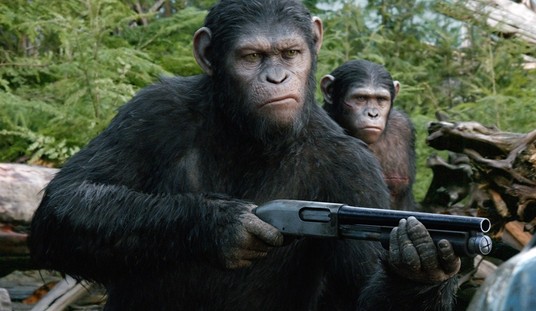
40 years of agenda-driven pseudo scholarship—and voilà: Masculinity becomes a pathology in need of a cure. https://t.co/c99kypzWEW
— Christina Sommers (@CHSommers) January 7, 2019
So if you are a biological woman who believes you are a traditionally masculine man, are you now undergoing something psychologically harmful? https://t.co/tZAQ66jpbW
— Ben Shapiro (@benshapiro) January 7, 2019
There is nothing wrong with masculinity.
There is a difference between showing emotion and doing this https://t.co/sfLN9mjZeA https://t.co/AP7poqOs4a— Dana Loesch (@DLoesch) January 7, 2019
This sort of display of emotion is what Dana Loesch is referring to (language warning):
“Mam, your flight is delayed 15 minutes.” pic.twitter.com/67rE5RTMHb
— Barstool Sports (@barstoolsports) January 7, 2019
Human race has evolved and survived over 300k years. Masculinity has been around for every bit of it. The APA is telling us that, despite science showing us natural selection, masculinity somehow made it through that 300k years, unscathed- and is bad for us? So much for science
— kham (@OutOfKenTroll) January 7, 2019
More liberal “toxic masculinity” BULLSHIT! 50 years of feminists hammering that boys & girls are same has led to all the male disfunction we see today! They are in fact VERY different in EVERY BIOLOGICAL way! To fight biology & human nature is begging for people to be screwed up!
— RegularJoe (@gt40bear) January 7, 2019
Liberals are DETERMINED to effeminate men at every given opportunity
— Will. Power (@KIR_bigg50) January 7, 2019
Thank god we had traditional masculinity in rich supply on, for example, June 6, 1944.
— Timothy F. Sweeney (@timothyfsweeney) January 7, 2019
And this is why we have snowflakes! A manly-man is what we are losing and I for one dislike it very much!
— Lynn Tina (@LynnTina7) January 7, 2019
The APA is as agenda driven as any organization. Contrarian thought is not tolerated…ironic given what they say they stand for.
— The Kindly Curmudgeon (@bkuff1) January 7, 2019
Id argue its the assault on masculinity that is psychologically damaging for men and young boys.
— John Molnar (@Gear6A) January 7, 2019
the APA is recognizing after 60 years of responding to inadequecy in women's psychology that it has ignored male psych, which has been left in the Fruedian stone age. feminist assault on "patriarchy" characterized men as oppressors while lavishing attention on female psychology.
— Alex Howlett (@Suetonius_) January 7, 2019
The @APA has normalized sexual deviancy and mental illness while declaring normalcy as being disordered. They’re a disreputable disgrace filled with quacks who wrote the book on political correctness.
They have also declared what is evil to be good and what is good to be evil.
— Dennis Jordan (@DennisMJordan) January 7, 2019
What if we lived in a world in which a man cutting off his genitals and claiming to be a woman is considered normal but being a regular man is toxic? Oh wait, we already do.
— Stephen White (@dclayclerk) January 7, 2019
What next, women are too feminine?
— Eddie ?? (@JustMeEddie66) January 7, 2019
Why isn’t toxic femininity a term?
— Jackson Long (@jacksonlong44) January 7, 2019
There is positive masculinity and negative masculinity. Our society is much more focused on the negative right now but that will pass… by doing things like not raising our children with traditional masculinity standards.
— rock slut (@andtagurit) January 7, 2019
I’m a fan of keeping the definition of masculinity to helping the weak, upholding the values of chivalry, being honest, working the hardest you can for your loved ones. You know, things that made men great in the first place.
This is agenda-driven and disgusting.
— Adam (@Pancake_soupp) January 7, 2019
Related:
School children in Britain being taught that ‘menstruation must be inclusive of all genders’ https://t.co/Jk22mp965N
— Twitchy Team (@TwitchyTeam) December 23, 2018











Join the conversation as a VIP Member